Social Housing Renovation in Covelo
A full renovation of an existing building in Covelo, transformed into social rental apartments and shared workspaces.
Location: Covelo, Pontevedra
Status: Completed
Built Area : 550 m2
Year: 2025
The project consists of the full renovation of an existing residential building in Covelo, a municipality in the province of Pontevedra, Galicia. The intervention transforms a previously deteriorated construction into four social rental apartments and two coworking spaces, giving the building a new public and domestic role within its local context. Rather than approaching the work as an isolated architectural object, the project is understood as part of a broader strategy of revitalization for small municipalities facing demographic decline, where the reuse of existing buildings can become a precise tool for social, environmental and territorial continuity.
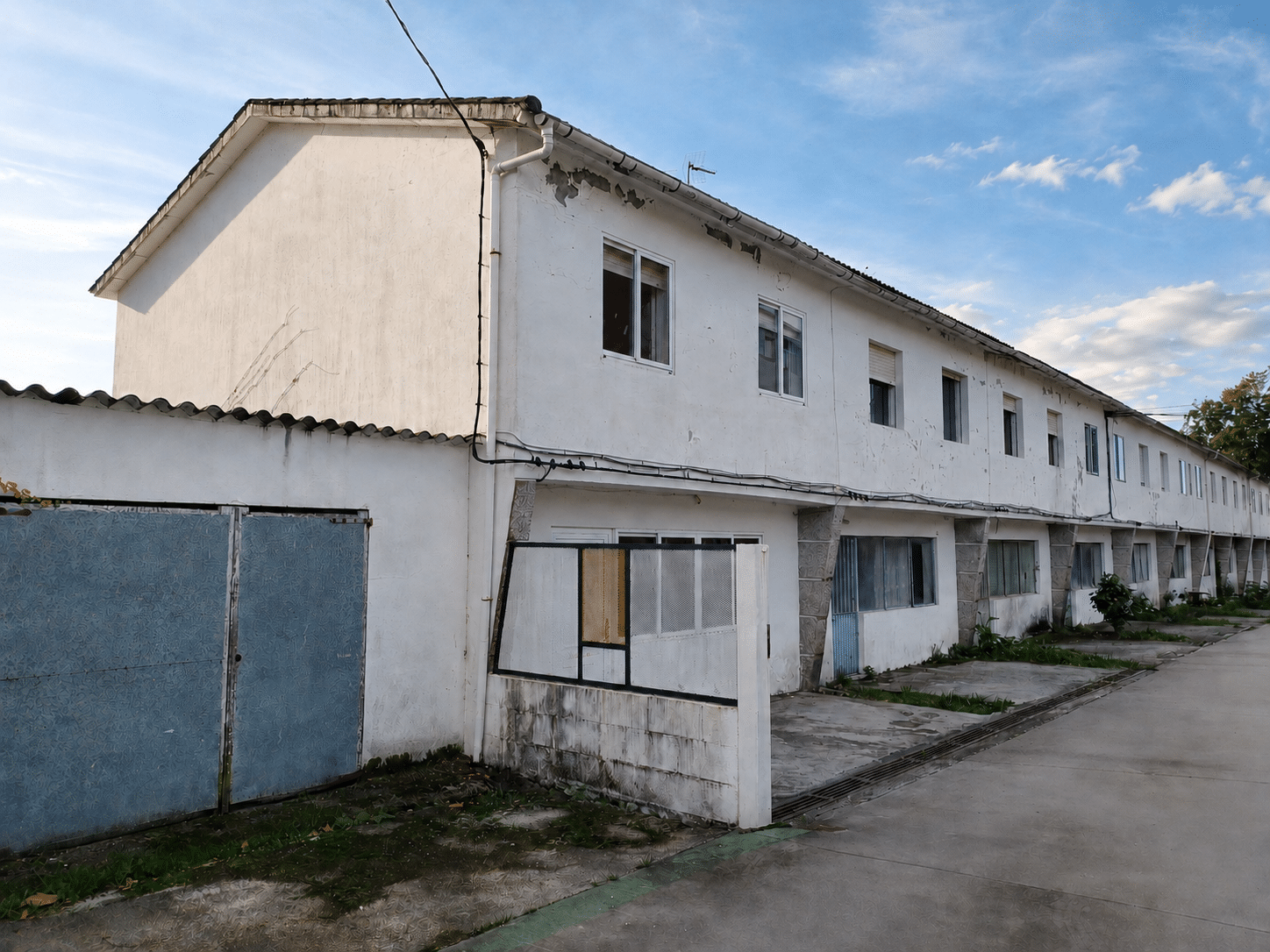
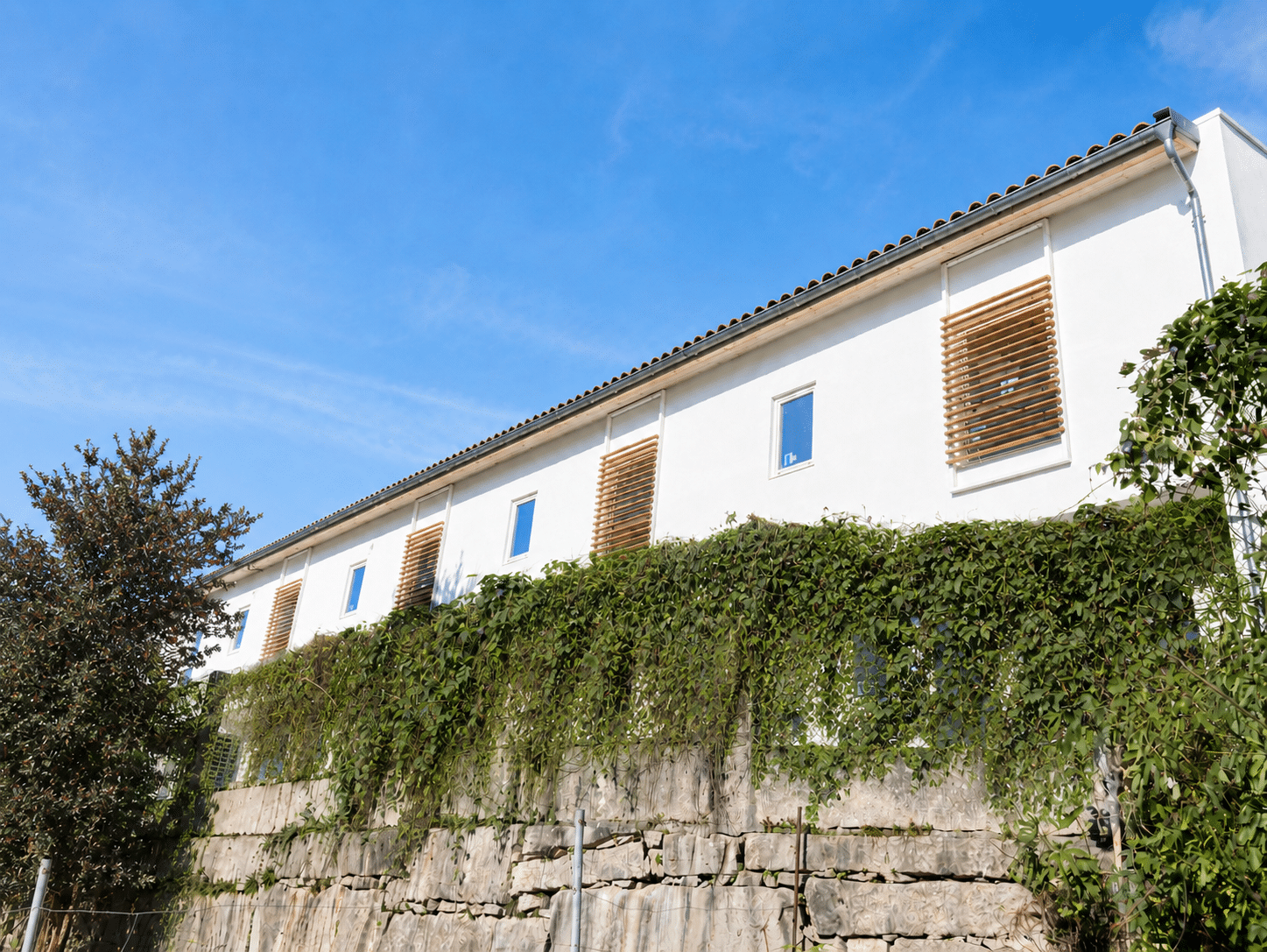
The original building was part of a linear residential row, located between the urban edge and a landscape of stone walls, vegetation and sloping ground. Its previous state showed the accumulated traces of time: worn façades, obsolete construction systems, damaged finishes and a fragmented relationship with the exterior. The renovation preserves the existing structure and urban presence of the building, while redefining its envelope, interiors and environmental performance. The operation avoids unnecessary replacement and works instead with the potential of the existing fabric, adapting it to new uses and contemporary standards of comfort, energy efficiency and accessibility.
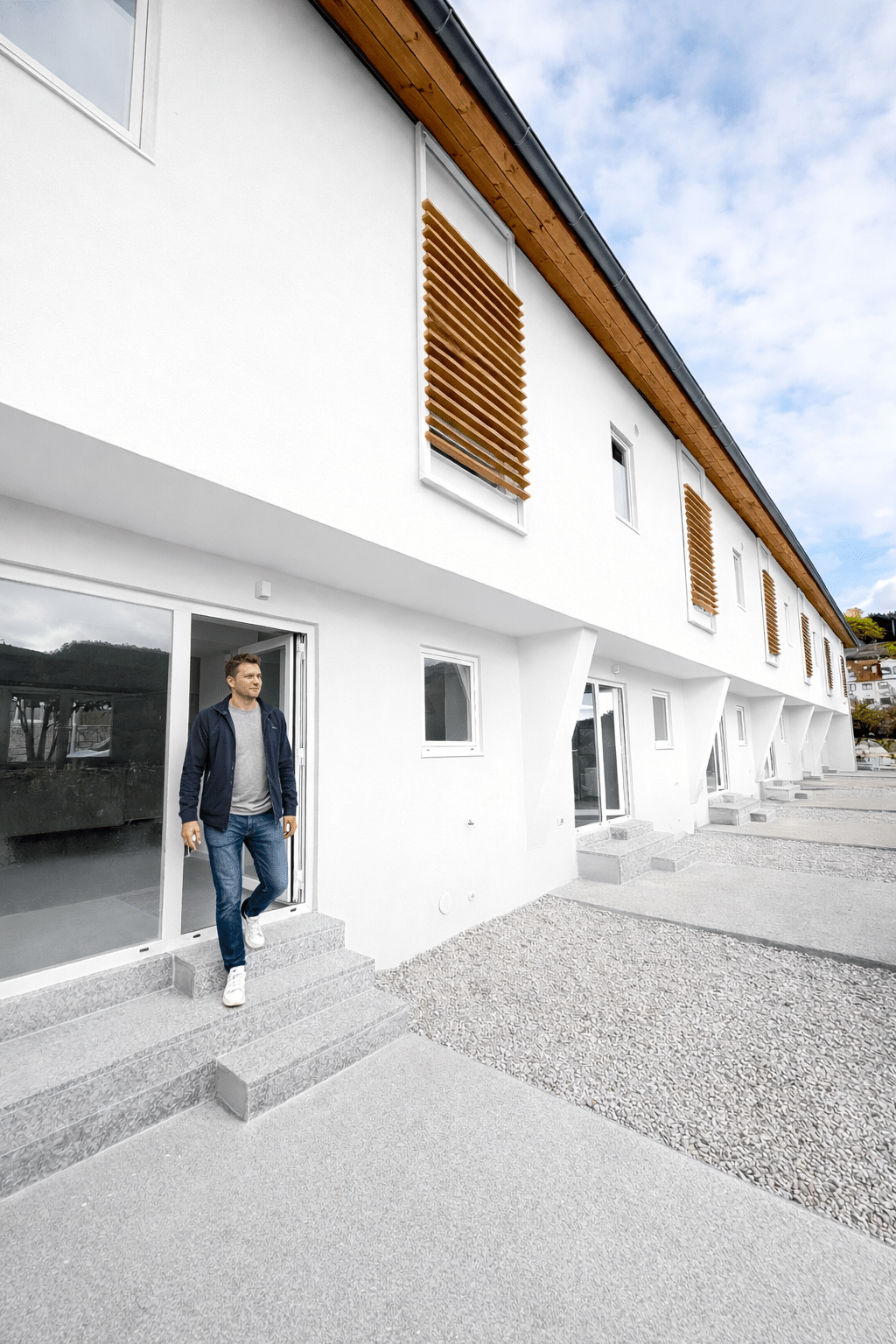
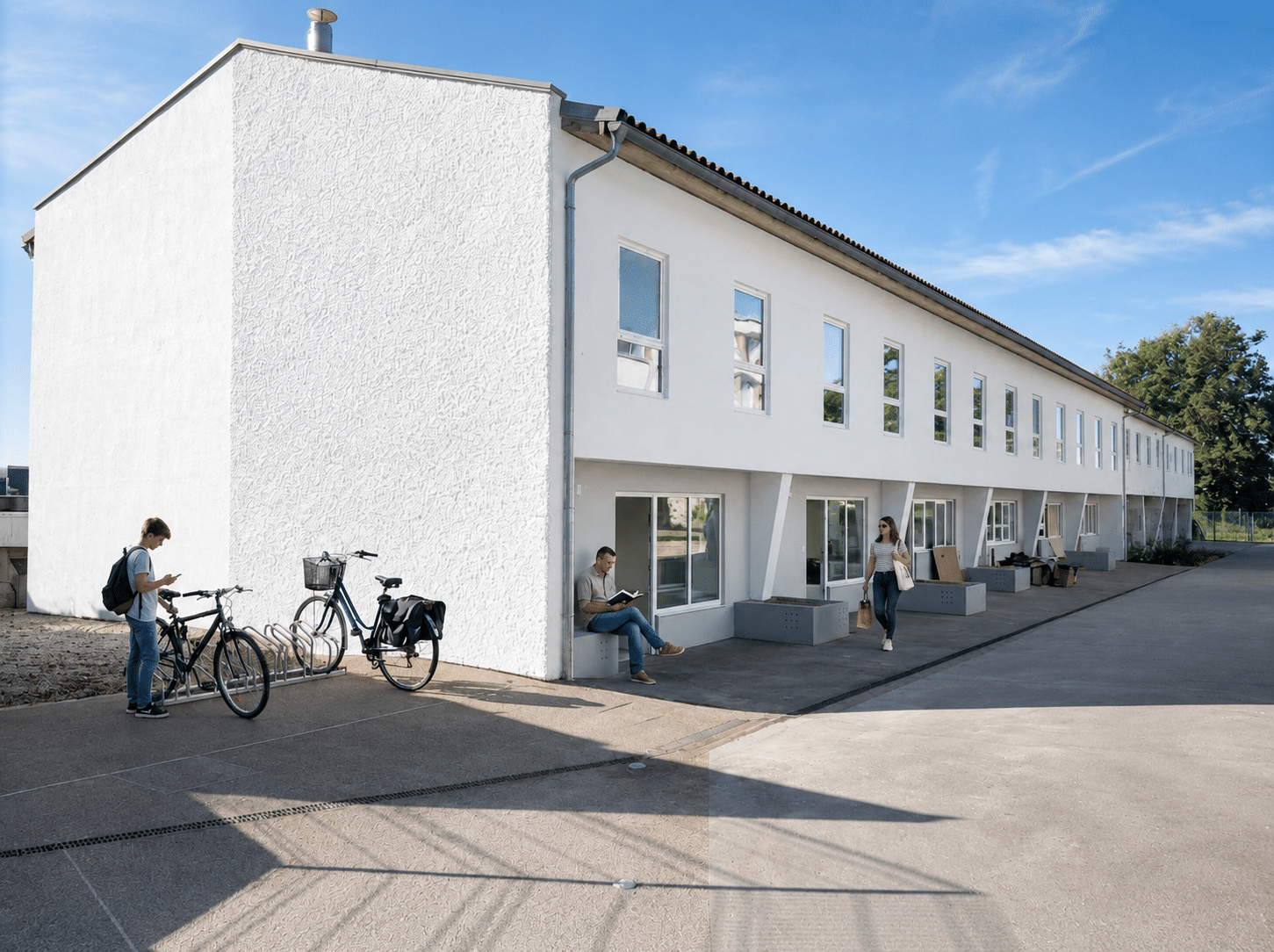
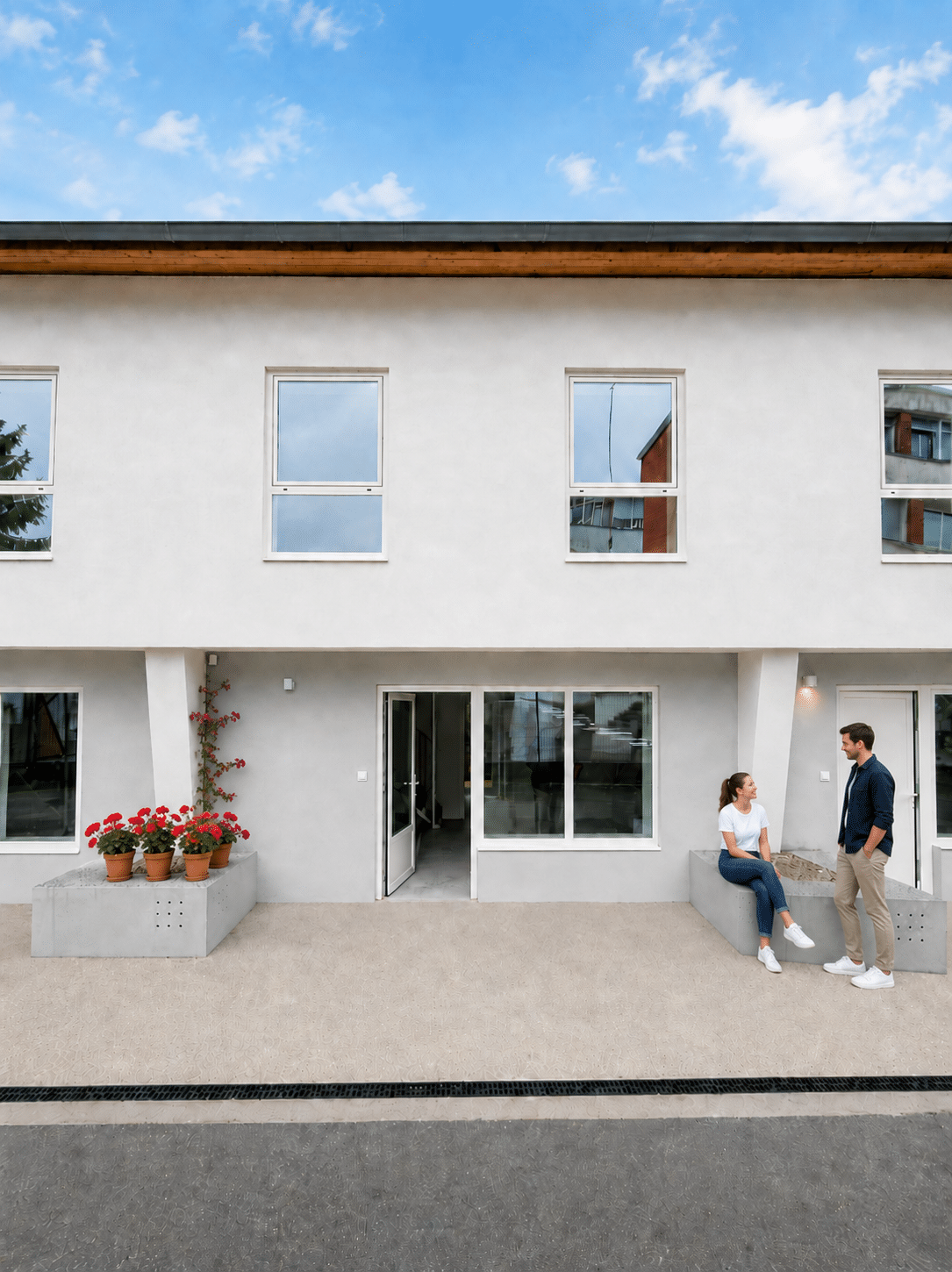
The architectural strategy is based on clarity, continuity and restraint. The building retains its elongated volume and its direct relationship with the access courtyard, but its image is redefined through a continuous mineral façade, precise openings and a more coherent treatment of the ground floor. The existing entrances are reorganized as a sequence of thresholds between the shared exterior space and the private interiors. Concrete benches and planters placed next to the dwellings introduce a domestic scale to the access area, allowing the façade to become more than a limit: a place for pause, meeting and everyday use.
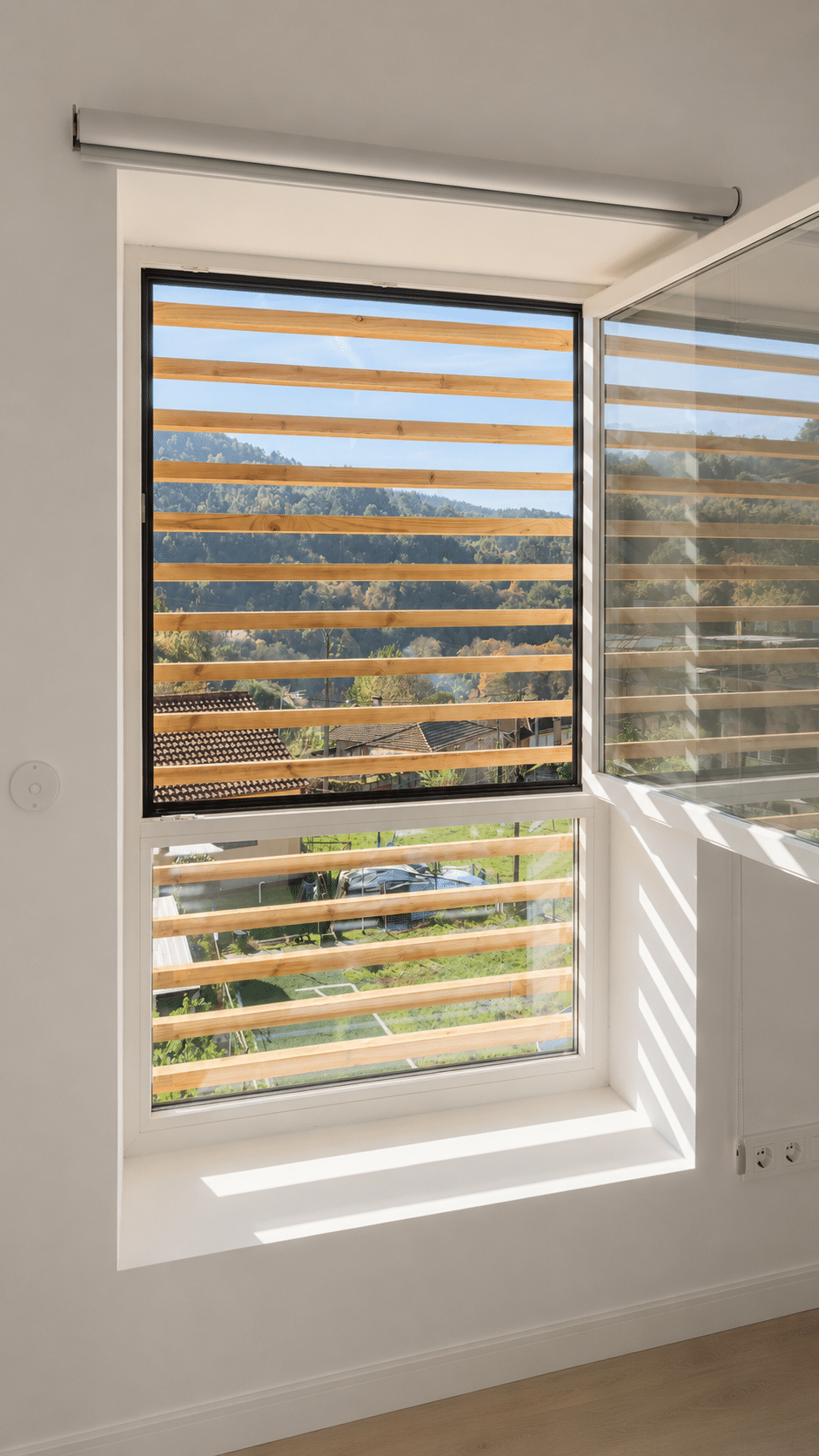
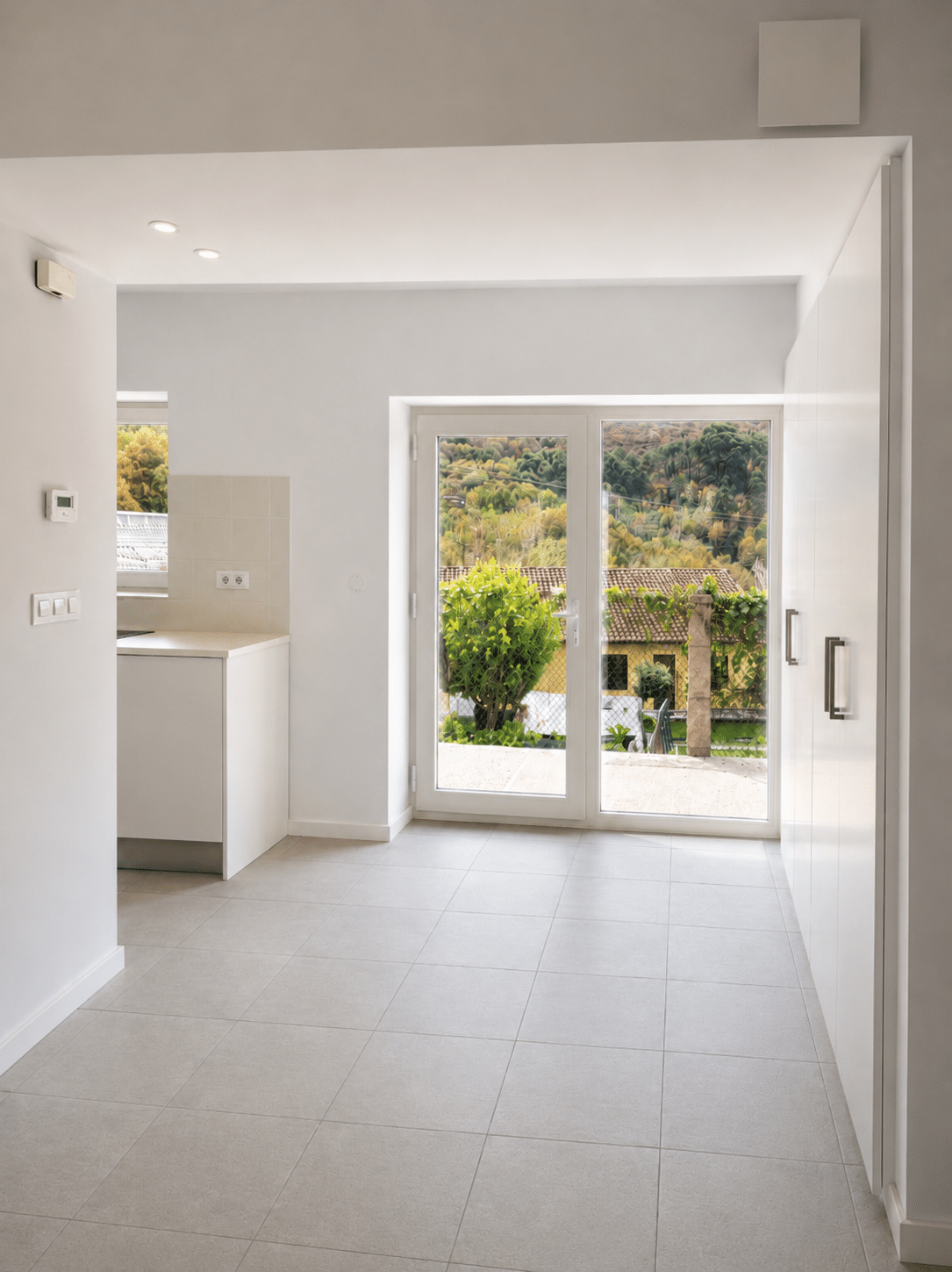
Inside, the apartments are conceived as compact, bright and efficient dwellings. The spaces are organized with a clear distribution, neutral materials and large openings that bring natural light into the living areas. The project avoids unnecessary formal gestures and focuses on creating calm, adaptable interiors, where the relationship with the surrounding landscape becomes part of the daily experience. Views towards the green slopes, nearby houses and rural fabric of Covelo connect the new domestic spaces with the identity of the place.
The intervention combines affordable housing with shared workspaces, responding to new ways of inhabiting smaller towns. The inclusion of coworking areas expands the role of the building beyond residential use, introducing a productive and communal dimension. This mixed programme supports a more flexible occupation of the building and contributes to the creation of local activity, offering spaces for living, working and meeting within the same renovated structure.
From a constructive point of view, the project prioritizes environmental performance and low-impact renovation strategies. The building has been designed and built to high standards of energy efficiency and sustainability, supported by European Next Generation funds. The renovation incorporates a new timber roof structure, highly breathable, low-VOC finishes and solar control systems that improve summer comfort while allowing the dwellings to benefit from natural light and views. These measures reduce energy demand, improve indoor air quality and extend the life cycle of the existing building.
Materiality is treated with a quiet and durable approach. The white mineral envelope gives the building a renewed presence without breaking its relationship with the surrounding village fabric. Timber appears in the roof eaves and solar protection elements, adding warmth, depth and a constructive reading to the façade. The exterior ground surfaces, concrete benches and planted areas form a continuous base that gives order to the access space and softens the transition between the building and its surroundings.
The project achieves an approximate 95% reduction in non-renewable primary energy consumption and CO₂ emissions, demonstrating how the renovation of existing buildings can become a relevant environmental strategy. In this case, sustainability is not limited to technical performance; it is also expressed through reuse, adaptability and the capacity to activate a building that already belonged to the place.
The result is an efficient, healthy and responsible building that combines affordable housing and shared workspaces. Its renewed architecture is discreet, precise and connected to its context, offering a model of intervention where social purpose, environmental performance and architectural continuity are part of the same project.
Credits:
Architectural design: 4×30 & Tree Arquitectura y Rehabilitación
Collaborators: Paula Cesteros, Daniel Muñoz
MEP design: Gaia
Structural design: Refuerza Consultoria Técnica
General Contractor: Cruzval SL
Timber supplier: CLT slab in new roof by Xilonor