Timber House in Sierra Norte de Madrid
A compact timber house built with bio-based materials to reduce embodied carbon in the Sierra Norte de Madrid.

Location: Sieteiglesias, Madrid
Status: Built
Built Area of dwelling: 116 m²
Year: 2020
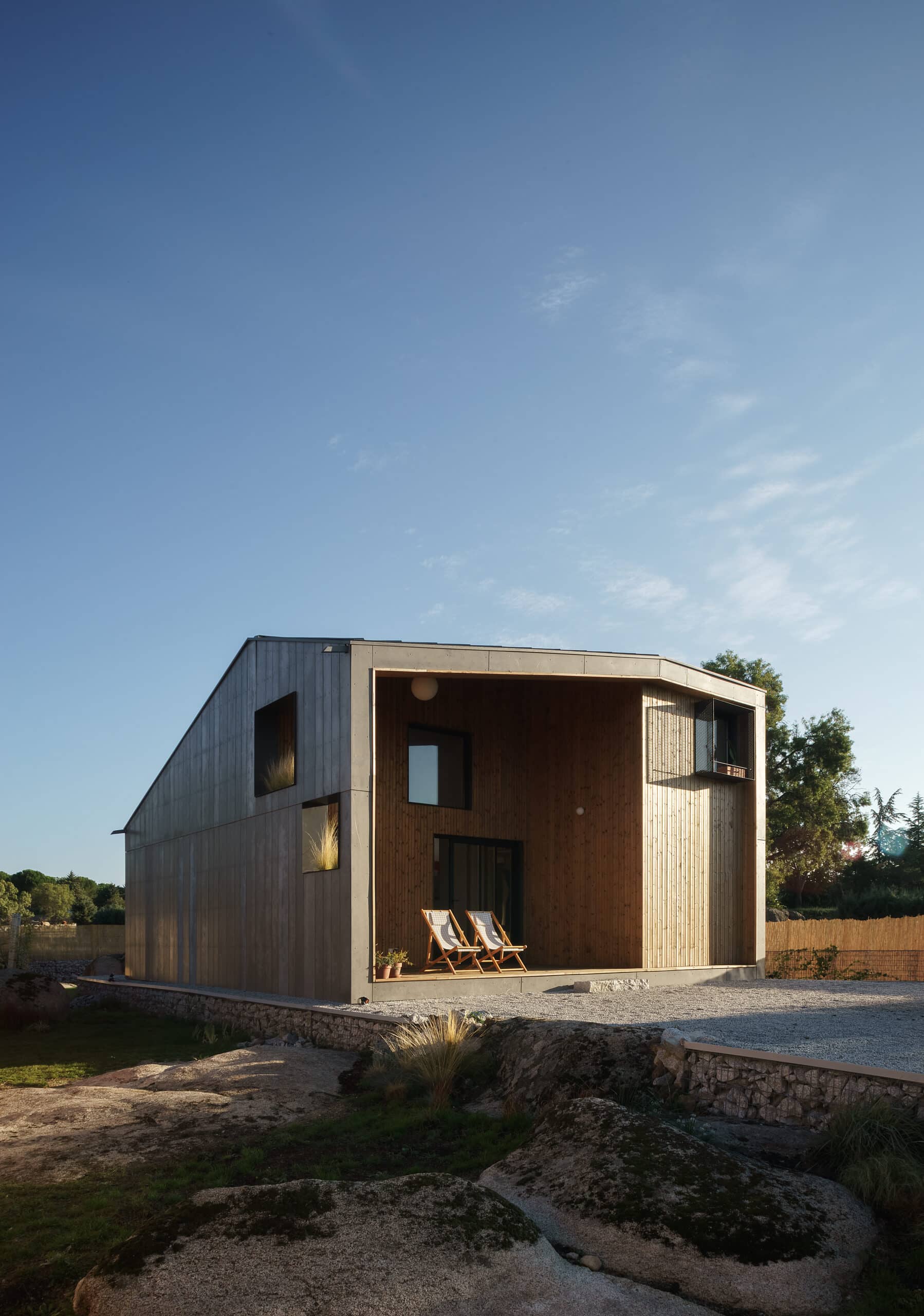
This house, completed in 2020, represents one of the first projects by 4×30 in which timber was not only used as a finish or interior material, but as the main structural and constructive system of the building. Located on the outskirts of Sieteiglesias, in the Jóbalo valley at the foothills of the Sierra del Rincón, the project explores the capacity of a compact timber dwelling to establish a precise relationship with its landscape while reducing the environmental impact of construction.
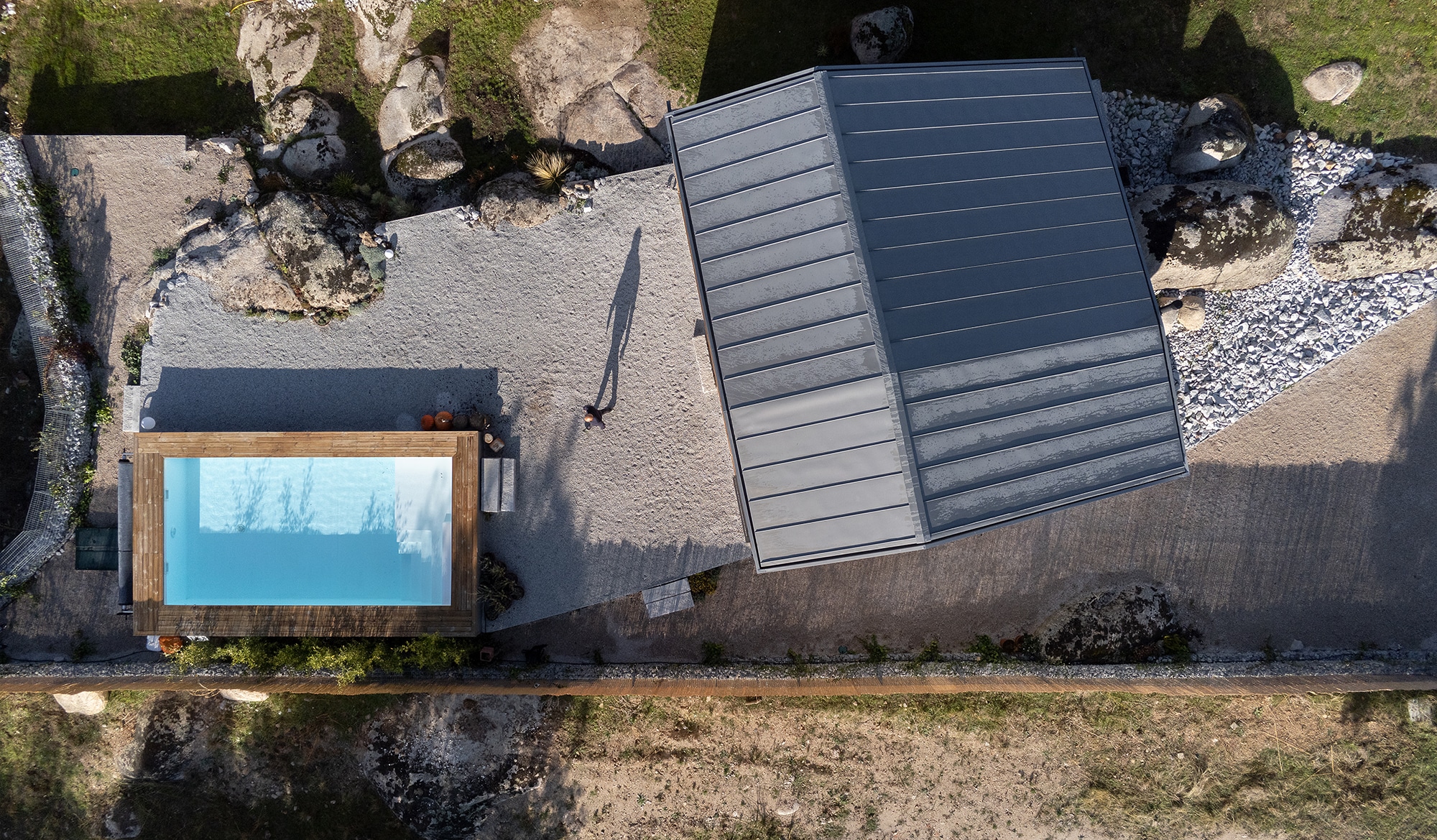
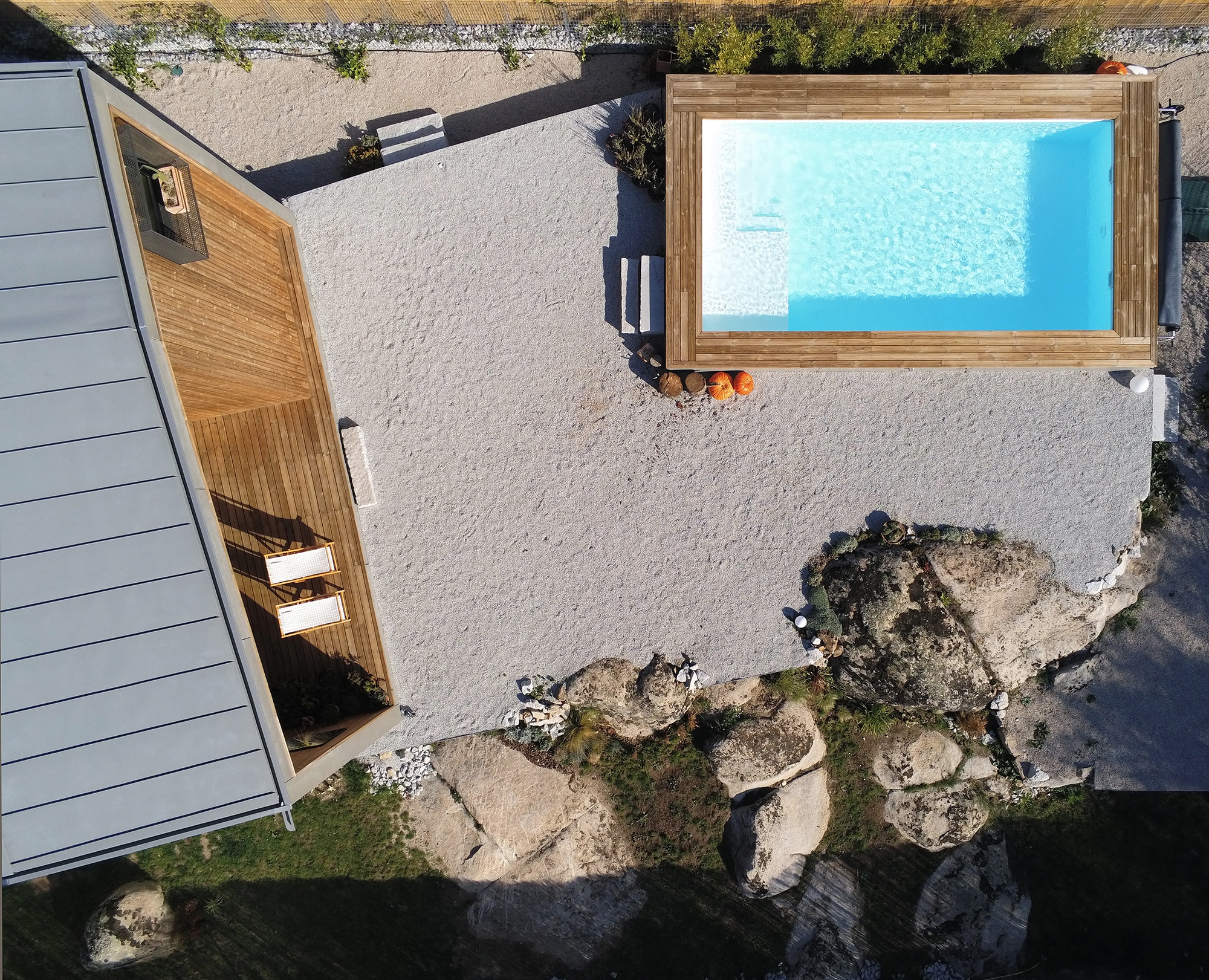
The plot is long and narrow, extending from the access road to the north towards a creek and an open granite landscape to the south. Beyond the garden, the views unfold towards the Sierra del Espaldar and Pico de la Miel. Rather than occupying the site as a linear object, the house is placed near the centre of the plot and slightly rotated. This gesture avoids residual corridor-like spaces along the boundaries and defines a more protected garden area around the swimming pool, while preserving long visual connections with the surrounding terrain.
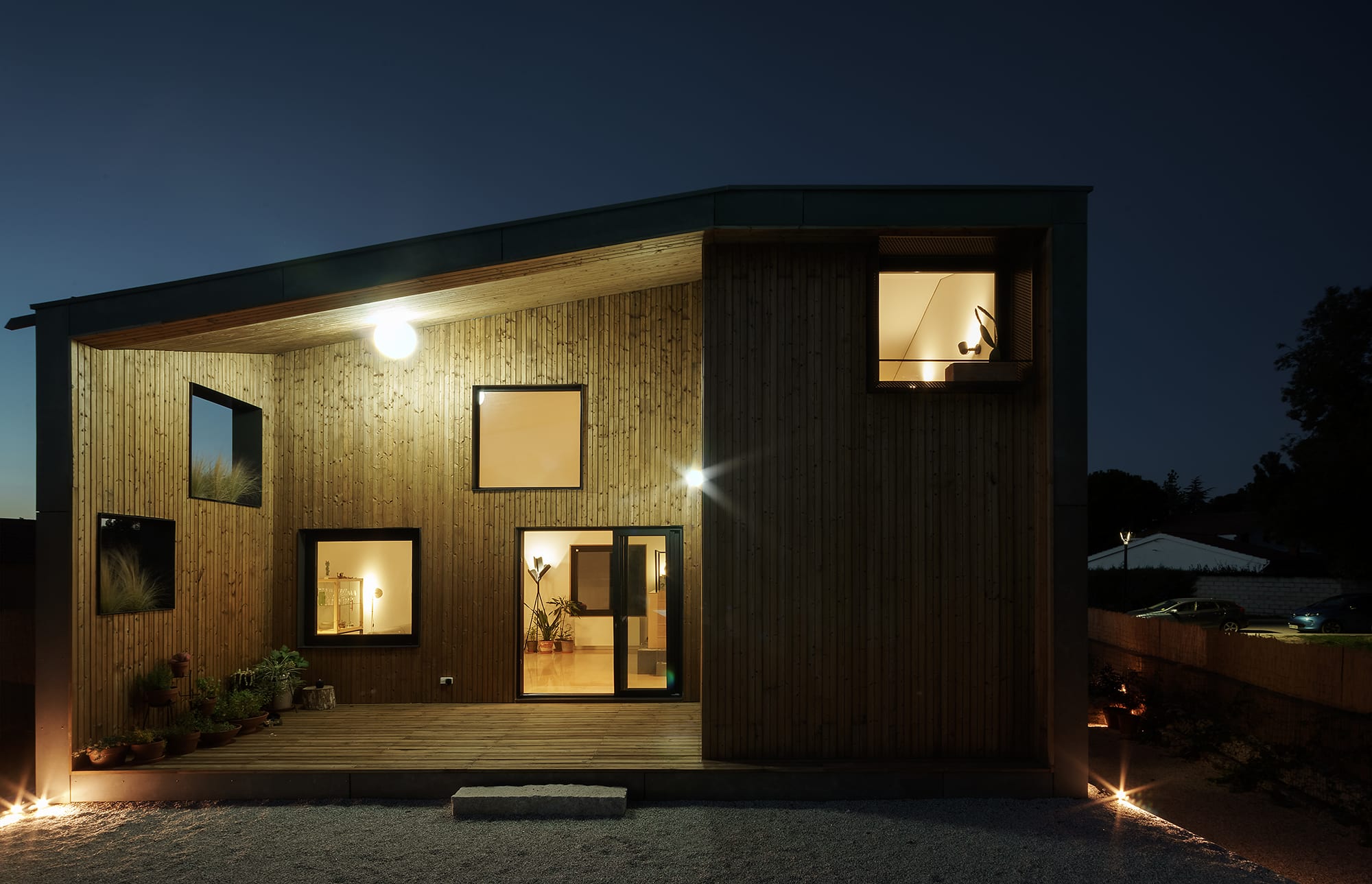
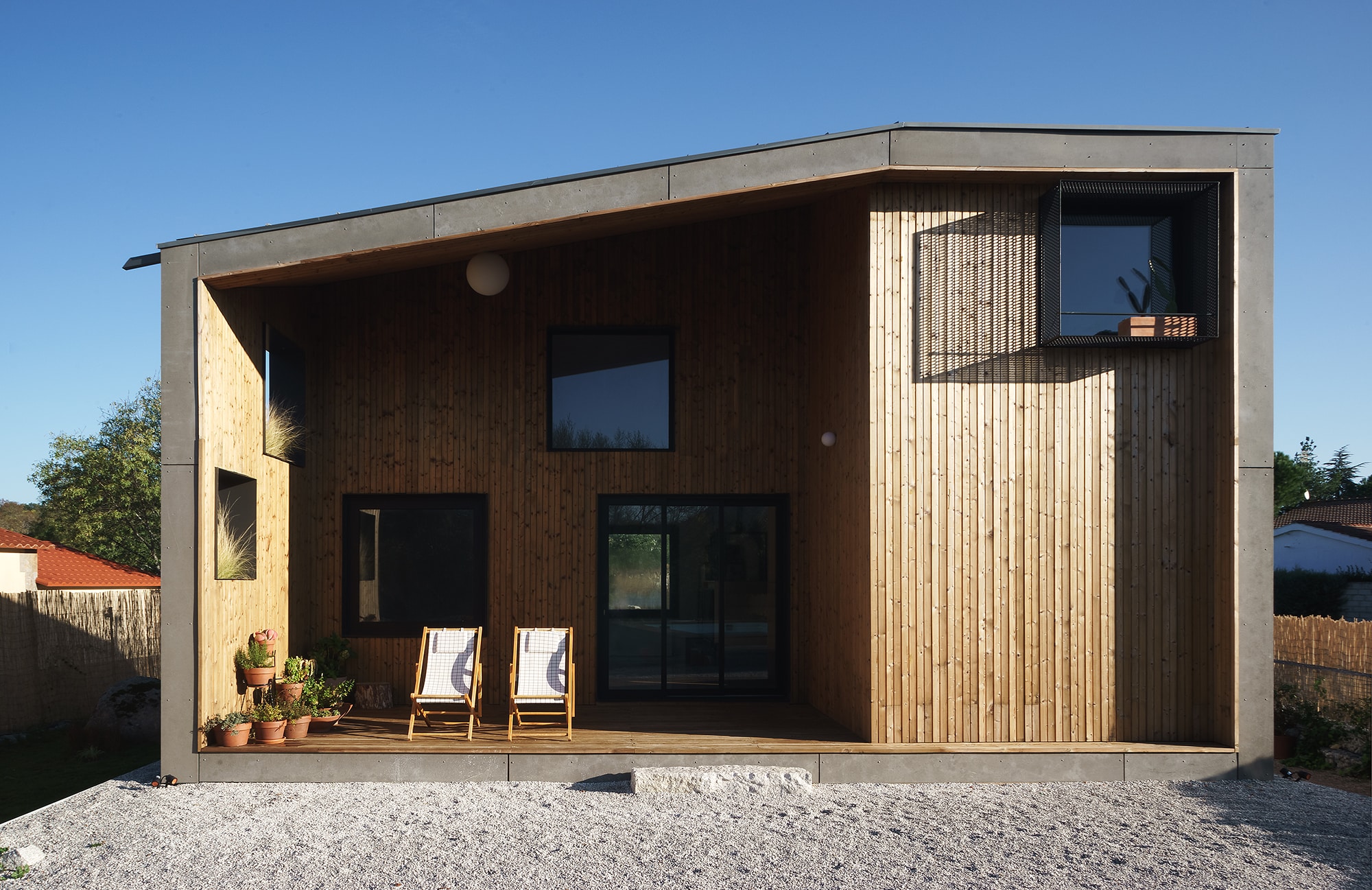
The house is conceived as a compact volume with a clear environmental and spatial strategy. Its reduced footprint frees up part of the plot for outdoor use, limits the surface area of the thermal envelope, and improves the energy behaviour of the building. Inside, the dwelling is organised around a double-height living and dining room covered by a sloping roof. This central space acts as the main domestic room and as a spatial connector between the different parts of the house. Openings of different sizes are placed in the surrounding walls, creating cross views between the interior, the porch, the garden and the distant landscape.
The programme is arranged with a high degree of efficiency. The kitchen and office are located on the ground floor, while the bedroom occupies the upper level. Between both areas, a mezzanine accommodates the bathroom and dressing room. Below this intermediate level, the technical and storage spaces are concentrated. This compact organisation allows all wet rooms and technical installations to be grouped around a single core, simplifying the construction and improving the overall efficiency of the house.
The building was initially conceived in cross-laminated timber, but was ultimately built with a lightweight timber-frame system due to cost and delivery-time considerations. Both the exterior and interior partitions are formed with spruce timber framing, while the floors and roof are supported by timber beams, including pine I-joists, OSB web beams and LVL elements. OSB Class III boards complete the structural system and provide support for the ventilated façade and roof layers.
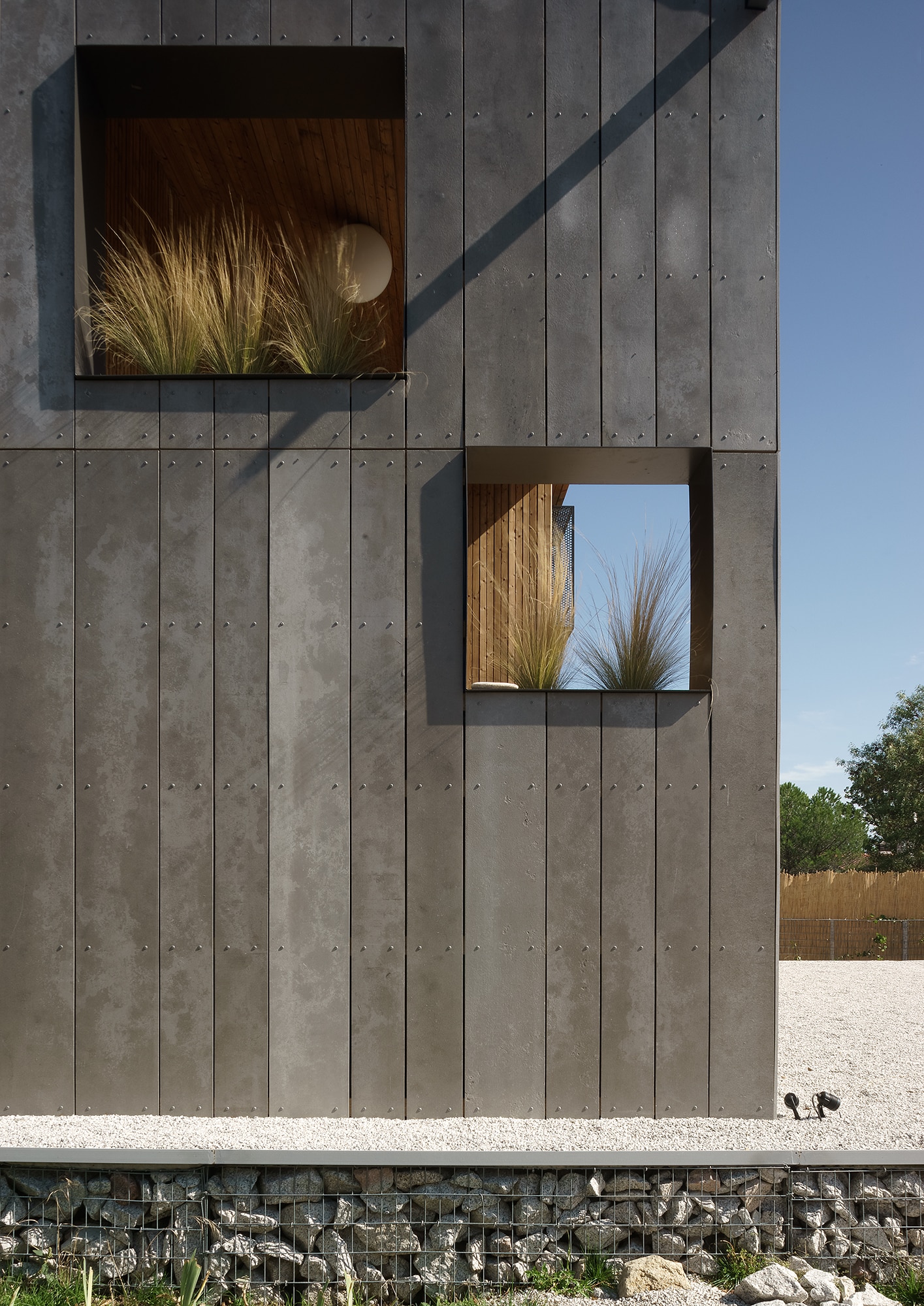
Materially, the house is defined by a controlled contrast between the outer envelope and the protected domestic spaces. The exterior is clad with cement-bonded wood boards cut into strips of different widths and finished in grey. This mineral tone continues onto the zinc roof, giving the building a continuous and restrained presence that resonates with the granite rocks scattered across the site. At the south-facing double-height porch, the envelope opens and changes character: spruce timber cladding reveals the wooden nature of the construction and gives the outdoor room a warmer, more tactile condition.
Inside, plasterboard surfaces are combined with birch plywood used for floors, doors, kitchen elements, window linings and furniture details. This use of timber and wood-based products gives continuity to the constructive logic of the project and reinforces a direct relationship between structure, finish and atmosphere.
The environmental strategy is based on the intensive use of bio-based and recyclable materials, low-impact construction systems and energy-efficient installations. A high proportion of the building is made from timber or timber-derived products, reducing embodied carbon when compared with more carbon-intensive construction systems. As a bio-based material, timber stores biogenic carbon during its growth and requires relatively low energy for extraction and transformation. Mechanical joints between timber elements make future disassembly, recovery and recycling easier, supporting a more circular approach to construction.
The house also incorporates biomass for heating and domestic hot water production, complemented by mechanical ventilation with heat recovery. Together, these systems improve operational performance and support a broader strategy in which material choices, compactness, energy systems and construction logic work as part of the same architectural decision.
More than a formal exercise, the project is an exploration of how a small house can be built with precision, lightness and environmental responsibility. Its architecture emerges from the relationship between timber construction, compact living, landscape continuity and the reduction of embodied carbon.
Credits:
Architectural design: Ricardo Pariente Villasur
Collaborators: Carlos Sanz, Andrés Temprano
MEP design: Atei Consultores
Structural design: GV408
General Contractor: Vacas Construcciones
Timber contractor: Intrama